
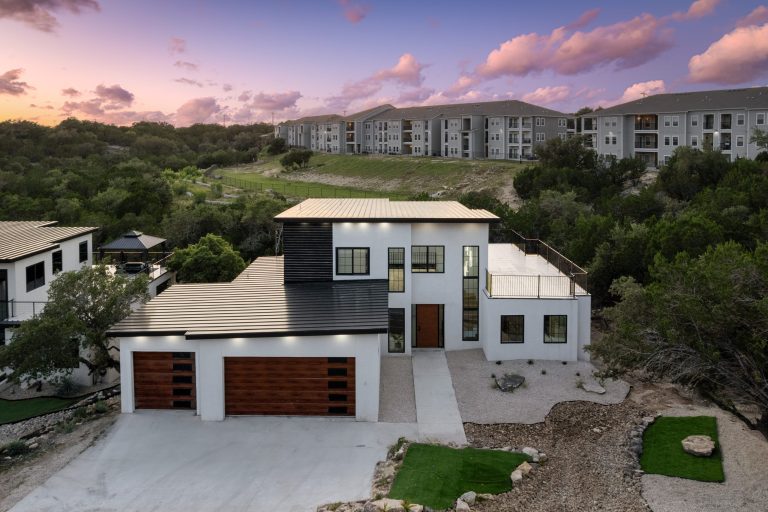
Energy costs are one of the largest ongoing expenses of homeownership. For most families, heating and cooling account for nearly half of their monthly utility bill. That is a significant chunk of money leaving your pocket every single month, and it adds up fast over the life of a home.
At MOTIVA Properties, one of the most common reactions we hear from AAC homeowners is surprise at how much their energy bills drop compared to their previous home. It is not a small difference. Here is why.
The Science Behind the Savings
Traditional wood-frame walls depend on fiberglass or spray foam insulation stuffed between studs to slow heat transfer. The problem is that the studs themselves act as thermal bridges, allowing heat to pass right through the wall assembly. Over time, insulation can also settle, compress, or absorb moisture, reducing its effectiveness.
AAC works differently. The material itself is the insulator. Millions of microscopic air pockets are distributed evenly throughout each block, creating a continuous thermal barrier with no gaps, no bridges, and no degradation over time. The result is a wall system that performs consistently from the day it is installed to decades down the road.
Real Savings, Not Theoretical Ones
The exact numbers depend on your climate zone, home size, and local utility rates, but AAC homeowners routinely report energy savings of 30% or more compared to similar wood-frame homes. In regions with extreme heat or cold, the savings can be even greater.
Those savings compound over time. On a 30-year mortgage, you could be looking at tens of thousands of dollars kept in your pocket rather than sent to the utility company. That is money that often offsets any difference in upfront construction costs well before the mortgage is paid off.
Our Design Services team factors energy performance into every project from the start, optimizing wall thickness, window placement, and HVAC sizing so your home performs at its best from day one.
Comfort You Can Feel
Lower energy bills are the headline, but the daily experience matters just as much. AAC homes maintain more consistent indoor temperatures throughout the day. You will notice fewer hot spots near exterior walls, less strain on your heating and cooling system, and a quieter indoor environment thanks to AAC’s natural sound-dampening properties.
This is especially noticeable in open floor plans and homes with large windows, where traditional insulation methods often struggle to keep temperatures even. AAC’s continuous thermal envelope handles these designs with ease.
A Greener Footprint
Using less energy is not just good for your wallet. It is good for the environment. A home that requires less heating and cooling produces fewer carbon emissions over its lifetime. When you pair that with the fact that AAC manufacturing uses less energy and generates less waste than traditional concrete production, the environmental case becomes even stronger.
For homeowners interested in pursuing green building certifications, AAC can contribute meaningfully to meeting the energy performance thresholds required for programs like LEED and ENERGY STAR. Our team can help you understand how AAC fits into your sustainability goals as part of the broader construction process.
Getting Started
If you are planning a new home and want to understand exactly how much AAC could save you in your specific situation, we are happy to walk you through the numbers. Every project is different, and the best way to get a clear picture is to talk with someone who has built AAC homes across a wide range of climates and conditions.
You can contact our team directly, explore our Material Procurement and Sales options if you are a builder looking to source AAC products, or check out our Training and Support programs to bring AAC expertise to your crew.
For a broader look at the advantages of AAC, read our earlier posts on why AAC is the future of residential construction and how AAC compares to traditional building methods.